
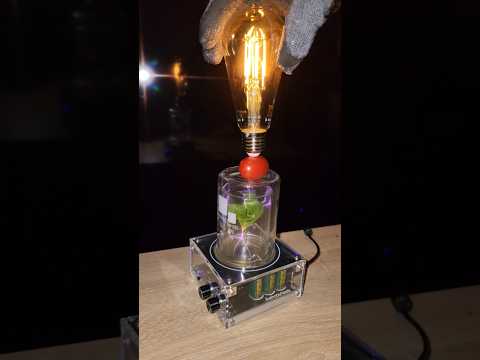

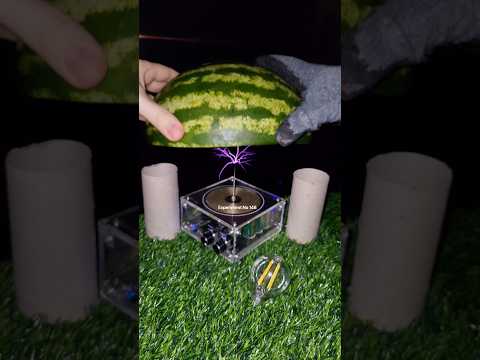





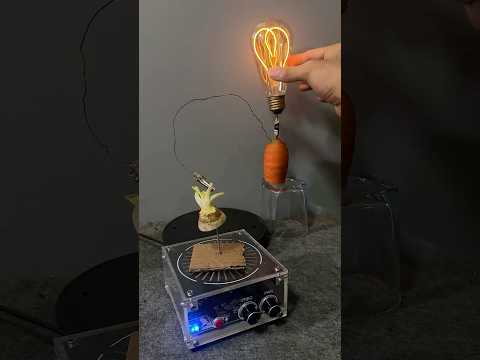
5V 12V 24V CW Tesla coil Circuit || Building a SSTC Tesla Coil (Step by Step) || DIY SSTC
sstc tesla coil, solid state tesla coil, tesla coil sstc, diy sstc.
how to make a homemade Tesla coil / mini Tesla coil
⚡ Learn how to build a low-voltage (5V to 24V) Solid-State Tesla Coil (SSTC)—perfect for beginners in electronics and high-voltage projects!
👤 Well, folks, this circuit doesn’t work miracles! The performance of an SSTC Tesla coil still depends on the voltage and current provided by a good power supply.
What I did was find a way to make the circuit sensitive enough to operate on low DC voltage.
🔋 This circuit works with any DC power supply providing more than 5 volts and over 1 ampere of current.
ℹ️ Using a self-oscillating topology, this project requires very few components, is easy to assemble, and runs on standard bench power supplies, batteries, or 12V/24V switching power supplies.
⚙️ How It Works
This self-oscillating design monitors the primary current via a small toroidal transformer to provide feedback to the MOSFET’s gate.
Instead of relying on signal pickup directly from the base of the secondary coil, the circuit reads the oscillation straight from the power circuit. The primary wire passes through the center of the ferrite ring, a small secondary winding on the ferrite core detects the magnetic field from the primary current and induces a high-frequency signal at the MOSFET gate, causing the transistor to switch exactly at the coil’s resonant frequency.
❌ The 10nF capacitor often used in previous versions can be replaced by any capacitor rated above 100nF (do not use electrolytic capacitors).
ℹ️⚠️ Important detail! One of the ferrite cores must be small. I found the smaller ferrite core inside a fluorescent lamp ballast.
💡 Pro Tip!
If the coil fails to generate an electric field when powered up, swap the (yellow) wires of the ferrite winding connected to the Gate and GND. This corrects the phase to start the oscillation!
⚠️ Caution: Although this is a low-input-voltage project, the MOSFET can get hot when running at 24V. Always use a heatsink.
Source: Watch on YouTube
Channel: MaxElectron
Views: 7,623
Duration: 10:25